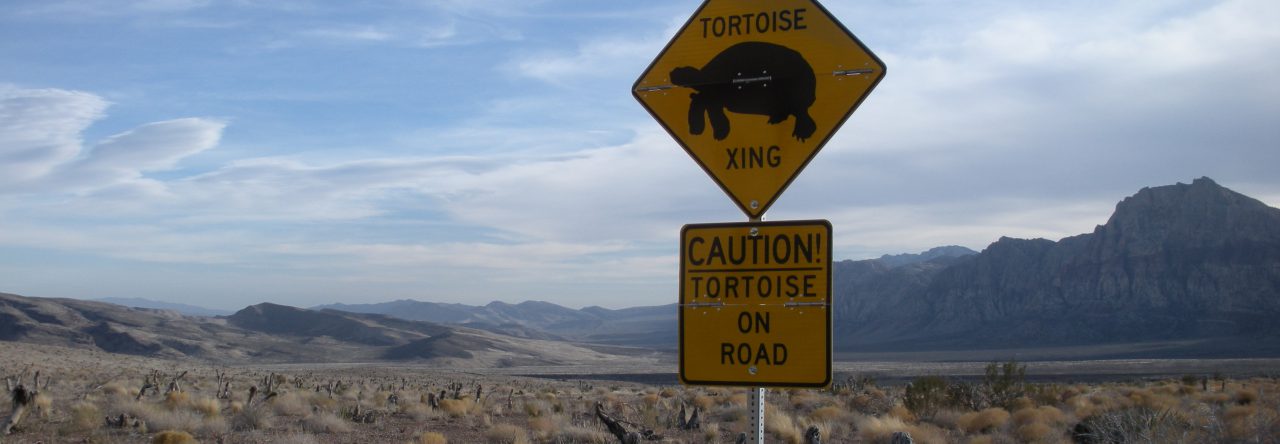
Despite living in Southern California for almost five years, Joshua Tree has mainly meant for me the awesome 1987 U2 album of the same name. (I saw them on that tour, at the legendary L.A. Coliseum. Yes: I’m old.) I had never been there until last week.
That got remedied because I had another conference in a cool place, which meant another chance to combine work with pleasure. The Western Political Science Conference was in Los Angeles — excuse me, Hollywood (they insisted) — and I wanted to check out the famous Joshua Tree National Park. My friend Jess, a fellow political scientist, and her boyfriend A.J. agreed to join.
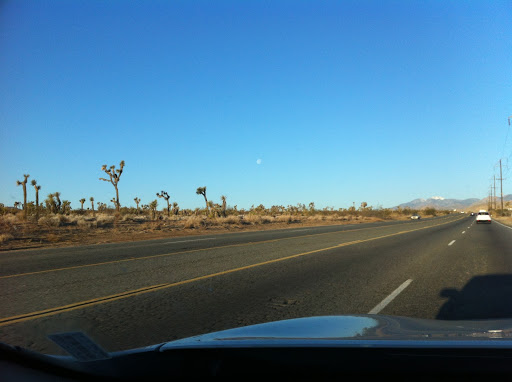 |
| Joshua trees in Joshua Tree. |
The purpose was climbing. It was exciting. And it was challenging. By which I mean, among other things, scary.
J-Tree is one of the first major climbing areas in the U.S., which means its routes were mainly created and graded back when the grade of 5.10 was seen as the hardest possible climb. (The world’s best climbers are into the 5.15s now.) Which means, further, that when you look at route grades, they are plagued by the opposite of grade inflation: sandbagging. It’s hard for me to say how much they were sandbagged because of other complications, some of them subjective. Much of the climbing was crack climbing, which I haven’t really done — there aren’t that many cracks in the gym — and because this was my first time trying trad leading.
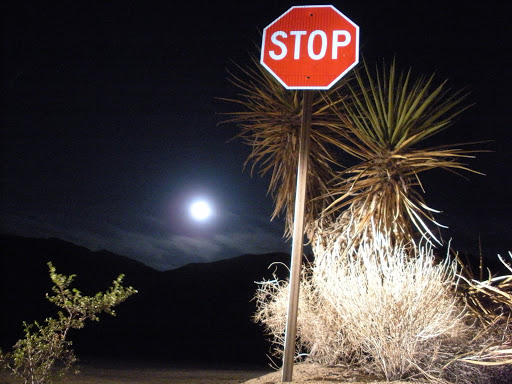
I’ll explain trad leading San Gorgonio Pass Wind Farm right when the sun is setting.
in a minute to those of you who don’t know what it means. First, a couple of words about the trip and J-Tree. I arrived at mid-afternoon, hopped into my rental, and headed east through L.A.’s permanent rush hour. It wasn’t as bad as it could be, all things considered, but I got to the Indian Cove campground where I had reserved two lots for Jess, A.J., and me at 8 p.m., right when the almost full moon rose from behind the otherworldly — or fake-looking — rocks. There is something surreal about moving from the urban sprawl of the metro L.A. area to the desert, especially as you pass by the weirdly haunting, enormous
It was wonderful to be back in the desert. I love the way the desert looks, sounds — and even smells: sand, sagebrush, rock.
Speaking of rock: we had read the rock in the Indian Cove was going to be grainier than else in J-Tree. Indeed: it was quite grainy granite. That can be hard on your fingers, and the rest of your body, as we learned.
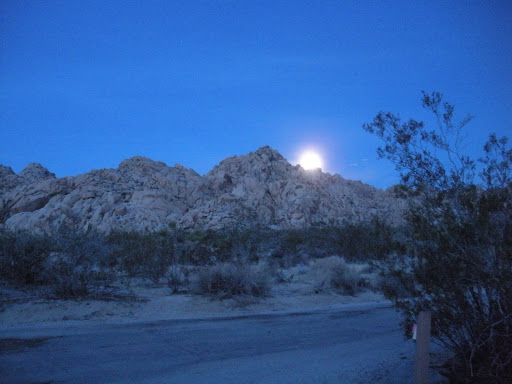 |
| Sun sets in the desert |
So that gets me to the climbing. As I’ve mentioned before, the outdoor climbing I’ve done is sport climbing: you climb up routes someone has prepared with pre-set bolts onto which you clip as you go up. You can also sometimes toprope outdoors — set up a rope at the top of the route on anchors of some kind — but the “real” way of climbing is traditional, trad: as you climb, you place your own protection (“pro”) as you go. Pro consists of varieties of static or dynamic devices you put in cracks in the rock and hope they stay in and catch you if you fall.
The climbing at Indian Cove is literally on the backyards of campgrounds (so much so you can’t climb some routes, we discovered). But it means the approach hikes are pretty minimal. There are literally hundreds of routes nearby; for our level, it seemed the number was in the dozens, but given the sandbagged grades, maybe even fewer. Maybe not.
How to describe leading a trad route the first time? In the climbing gym, I am kinda-sorta at the level of climbing 5.11s on toprope right now. Switching to leading and outdoors means it’s safe to downgrade by several full grades. Our first one was a 5.6, a route called Duchess on the Feudal Wall. Let’s just say it was OK, but challenging.
Technically, it wasn’t that hard, but wasn’t a walk in the park. In our gym, there aren’t many opportunities to practice climbing in a crack — sticking your hands, feet, other body parts — in to keep you from falling. So that was a challenge. And having to stop, look for the right-sized piece of protection at any given point added to the excitement. At the same time, I found interestingly that since you can’t really bail off a trad lead, I was willing to push where I might have given up in different circumstances. (It turns out this isn’t uncommon.)
Why can’t you bail, you ask? It’s because if you are trad leading, the only way to bail is to be lowered off the protection you have placed — do you really trust it to hold your weight? — and it means leaving behind the top piece of protection, which might cost $10-$60. I’m not a cheapskate, but I’m not that much of a wimp, either. At least not on a 5.6!
Well, whether it was a 5.6, as I understand the grade, or something very different, it was hard, though also quite enjoyable. Once I got up the route, I set up a toprope anchor for A.J. and Jess. In the video above, Jess is cleaning the route — removing the pro — as she climbs.
We only had one day to climb in J-Tree, but we managed a few, some on toprope, one more by me leading it. The granite tore us up, the sun burnt us up a bit, and the sandbagged grades humbled us, but we felt great. Once we finished in the late afternoon when the wind picked up and the sun sank, we went from tanktops and sandals to down jackets, gloves, and hats in no time in our campground, but it was all awesome all the same.
 Into the Not So Wild